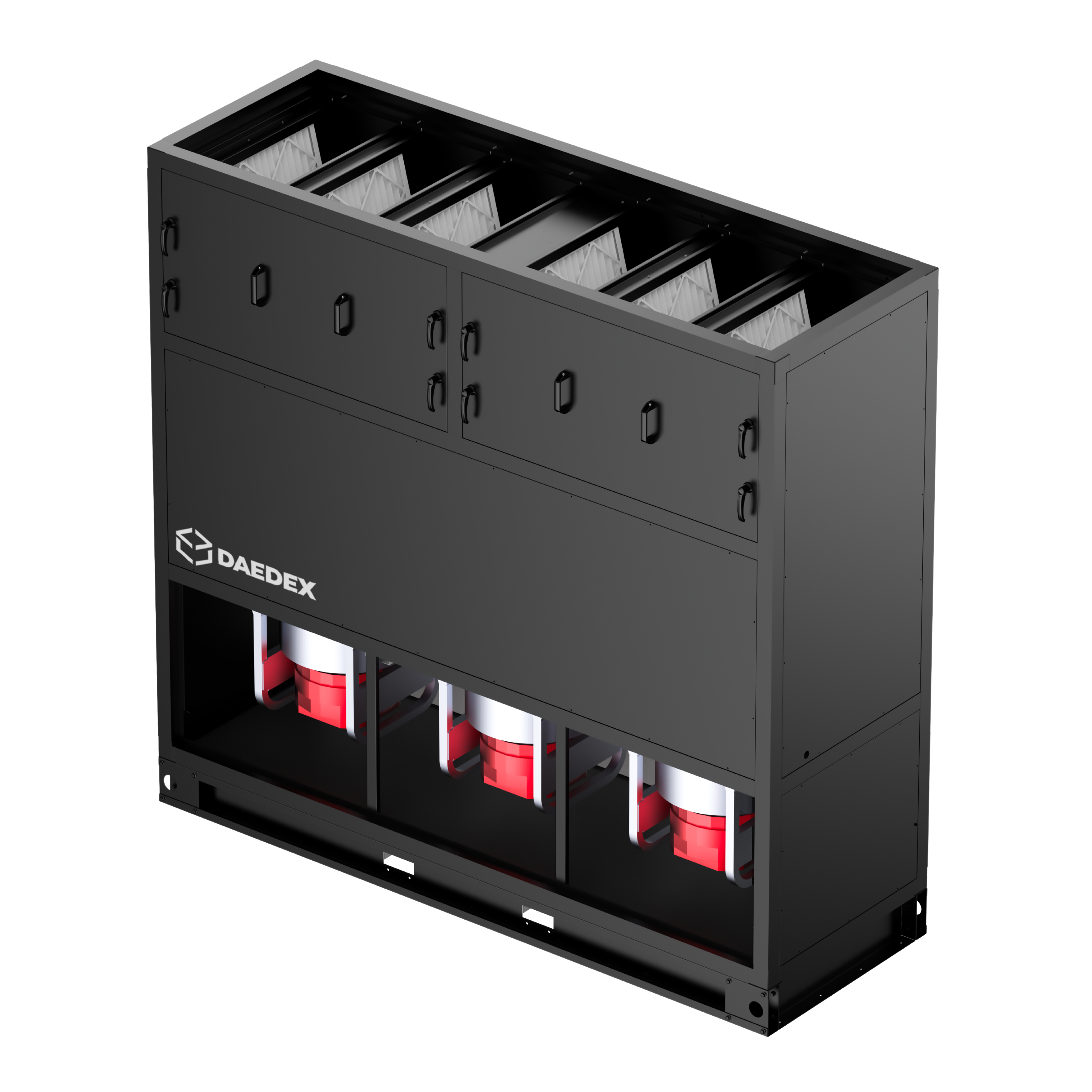
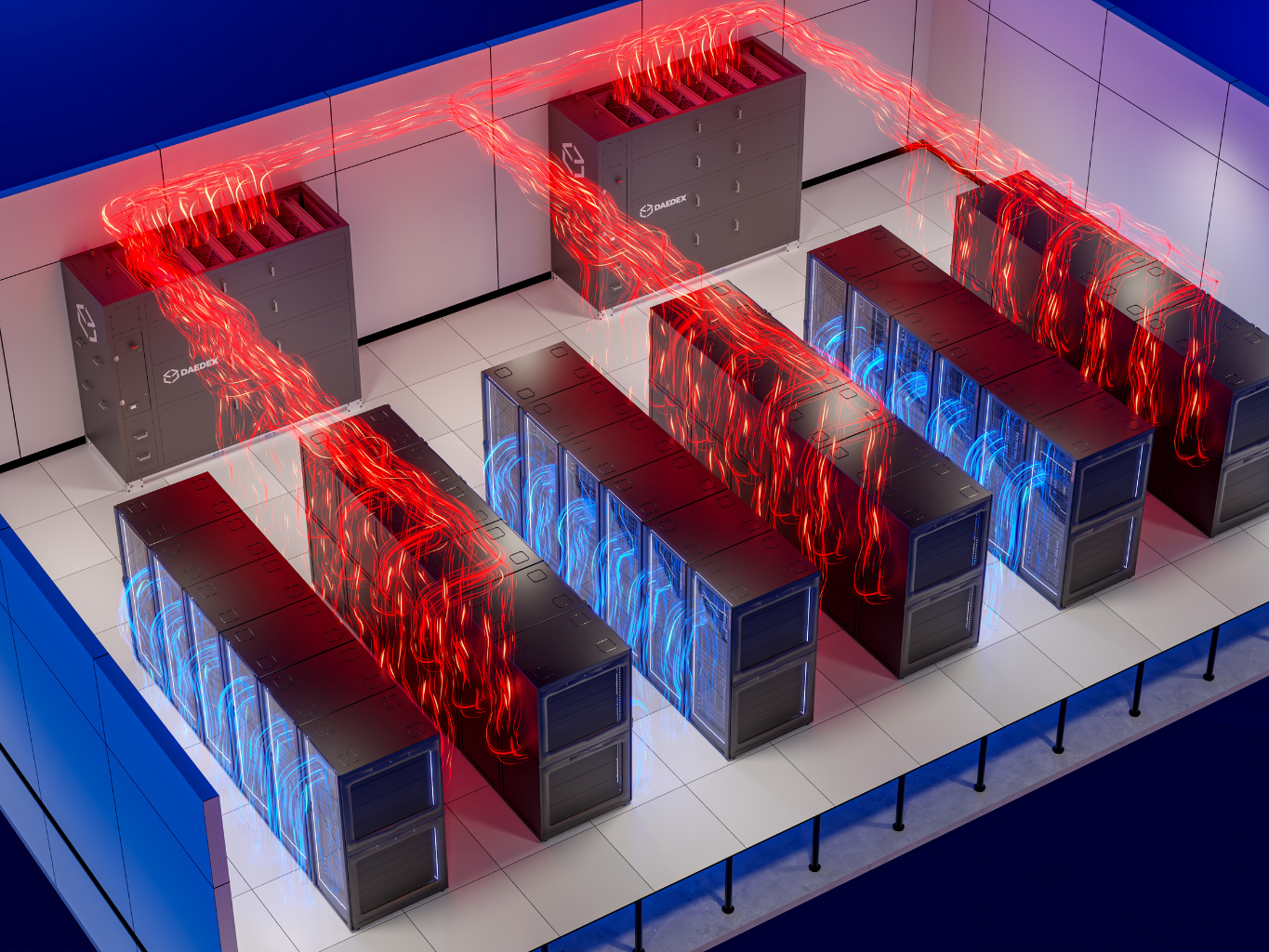
CRAH Units for Mission-Critical Cooling

Reliable cooling is not optional in mission-critical environments. Whether supporting high-density data halls, edge facilities, semiconductor operations or battery manufacturing, CRAH (Computer Room Air Handler) units play a central role in maintaining uptime, efficiency and long-term operational stability. Unlike traditional HVAC providers that force customers into rigid catalogs or extended lead times, Daedex combines engineering-first design with agile manufacturing.
Contact us
Download Brochure

Upflow and Downflow Configurations
One Platform, Two Strategies

Daedex offers CRAH and CRAC units in both upflow and downflow designs, giving operators flexibility without complexity.

When airflow reliability directly impacts revenue, performance or production continuity, wedesign systems that perform under pressure.

Downflow CRAH Units

Daedex downflow units are optimized for:
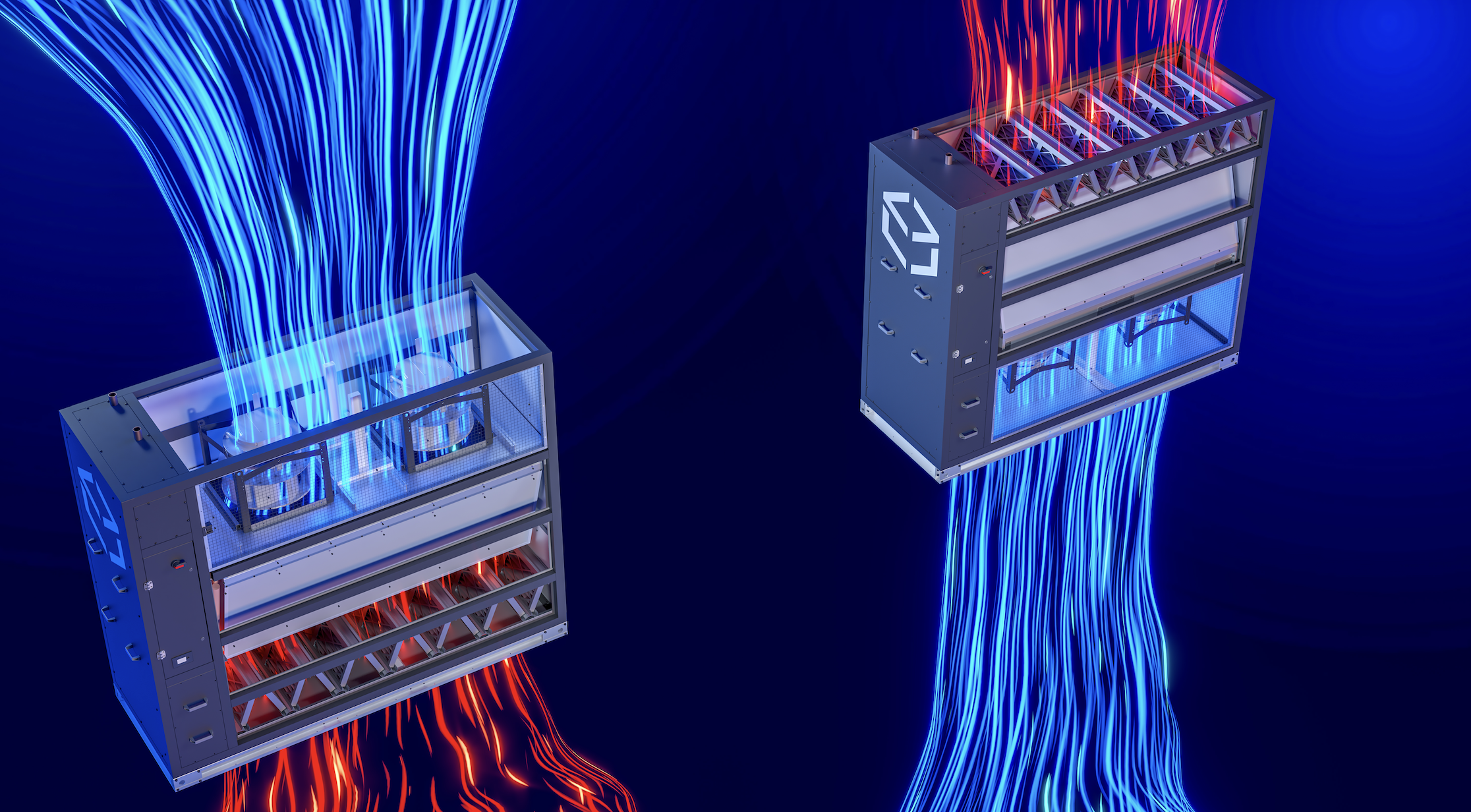
● Compact footprints in dense data halls
● Custom coil configurations and fan layouts
● Service access in tight mechanical spaces
● Integration with existing raised-floor infrastructure

Upflow CRAH Units

Daedex downflow units are optimized for:

● Front-intake airflow paths
● Flexible ducting or overhead distribution
● Efficient operation in constrained footprints
● Long-term adaptability as layouts change

Purpose-Built CRAH Systems
Engineered for Precision Performance

CRAH units may differ in how they manage heat rejection, but their role is the same: maintain stable environmental conditions in mission-critical spaces where temperature swings or airflow inefficiencies can cause real operational risk.

Daedex CRAH units are engineered to:

Deliver consistent, predictable airflow
Support high-density and evolving rack layouts
Integrate seamlessly with facility controls
and monitoring platform
Remain serviceable throughout their lifecycle

Our approach starts with understanding how your facility operates today and where it needs to go next.

Engineered for
Speed Without Compromise

In mission-critical environments, delays are more than inconvenient; they introduce risk. Daedex operates on a simple principle: speed is the new spec.By integrating design, engineering, controls and manufacturing under one roof

Designed with the full cooling platform in mind. Integrate air and liquid cooling without sacrificing either.

1
Design tailored CRAH systems in days—not weeks
2
Deliver finished units in weeks—not months
3
Eliminate coordination gaps between engineering and production
4
Provide clear, honest timelines from concept to commissioning

Engineered for
Capacity, redundancy & Long-Term Reliability

Cooling systems are only as reliable as their ability to be maintained.Daedex CRAH units are engineered to maximize cooling capacity within a compact footprint, all while maintaining a focus on reliability and redundancy. Features such as removable panels, hydraulic fan removal systems and single-point internal piping connections allow technicians to access critical components quickly and safely, even in restricted environments.

This focus on access helps:

Reduce mean time to repair (MTTR)
Minimize disruption during maintenance
Extend the operational life of the system
Protect uptime in facilities that cannot afford surprises

Integrated
Controls and Transparent Operation

Daedex integrates control systems at the factory, supporting platforms such as Distech and Siemens, with open protocols including BACnet and Modbus.

From startup through commissioning, customers know exactly how their system operates—and why.

FREQUENTLY ASKED QUESTIONS

What is the difference between a CRAH and a CRAC unit?

CRAH units typically use chilled water supplied by an external plant, while CRAC units rely on direct expansion (DX) refrigeration. Both are used to maintain precise temperature and humidity in data centers and mission-critical environments.

How do I choose between upflow and downflow CRAH units?

Upflow or downflow depends on where the racks are in the space. The option between them lets you direct your cold air closer to the chip, depending on the configuration. Daedex helps evaluate airflow strategy based on your layout and operational needs.

Are Daedex CRAH and CRAC units fully customizable?

Yes. Daedex systems are engineered to fit your facility’s space, airflow requirements, controls strategy and service constraints, without forcing unnecessary features or delays.

How quickly can Daedex deliver a custom CRAH or CRAC unit?

Design timelines are typically measured in days, with manufacturing completed in weeks. Actual delivery depends on project scope, but Daedex consistently outpaces traditional HVAC lead times.

Are these systems suitable for high-density environments?

Yes. Daedex CRAH and CRAC units are designed to scale with increasing rack densities and evolving cooling demands, supporting today’s loads while preparing for tomorrow’s.

Let’s build something that works

Have specs? Need guidance? We’re ready to help you scope and solve your cooling challenge.
Submit
Thank you! Your submission has been received!
Oops! Something went wrong while submitting the form.